Read: All Flourishing is Mutual
Written by co-Initiator Quita Sullivan
All flourishing is mutual! Abundance and Reciprocity in the Natural World: Can a behemoth learn from a berry?
I am sure that there are allies who might ask, “why not Braiding Sweetgrass?” After all, Robin Wall Kimmerer’s book is high on the list of required readings in many equity/diversity/decolonization supporting education and trainings. And rightly so, it’s an amazing book, one which I have read several times (including once just to compare Algonkian based languages). It is an extremely important book that shares an Indigenous worldview, and one that many have been exposed to already. Instead, the Native Theatre Movement chose her latest, the small and still comparatively underestimated, The Serviceberry. In high school, my boyfriend called me Chiquita pero picosa. Colloquially, it means good things come in small packages. The same is true of this small, 109-page book. I think it is so important, that during a sabbatical retreat, I gave copies to the group, including our sabbatical coach. My response is short – or else I would find myself writing a tome larger than the book itself!
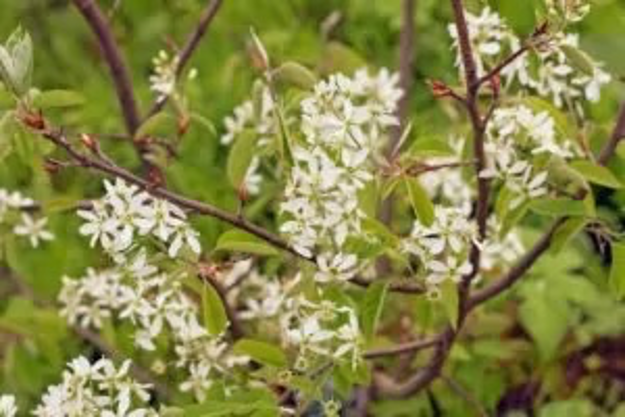
This little book is the most succinct explanation of the capitalism and the market economy that I have ever encountered. A market economy is based in scarcity – the more rare, the more that can be demanded in return. In a market economy, what should be treasured as a gift becomes a commodity. In a gift economy, the opposite is true. What is offered as a gift, implies a responsibility to the gift giver and the gift. It creates a relationship between receiver and giver based on reciprocity and assumes abundance not scarcity. Relationships create flourishing and abundance.
Compare a market economy as defined by Kimmerer:
“The greater the gap between supply and demand, the greater the scarcity, and therefore the price to obtain those goods rises and profit increases follow. In a market economy, the meat must be private property, accumulated for the well being of the hunter or exchanged for currency. The greatest status and success come from possession and profit.”
With her explanation of the gift economy:
“In a gift economy, wealth is understood as having enough to share, and the practice for dealing with abundance is to give it away. … The currency in a gift economy is relationship, which is expressed as gratitude, as interdependence and the ongoing cycles of reciprocity. A gift economy nurtures the community bonds that enhance mutual well-being; the economic unit is “we” rather than “I,” as all flourishing is mutual.”
This contrast between a gift economy and the market economy raises many questions in my mind about how the “American Theatre” (AT) functions. With many pundits decrying the death of theater in America (again, and for the umpteenth time), I have to hope that the next iteration will be more focused on reciprocity, relationship, and abundance. The current AT model, regardless of whether it is a not-for-profit or a for-profit enterprise holds to a scarcity model based on how much can be charged for tickets, on the gate keepers of what is “good theater,” on the narrow, carefully controlled, makeup of participants, whether patrons or artists, is struggling to support itself via business as usual. Dwindling attendance at performances cannot keep up with the costs of production, especially not when those costs are also based on a volatile market economy. It has not built relationships that will help it thrive. In my 16 years of supporting devised, ensemble theater, what I have seen is that those with deep relationships - the theaters, artists, and attendees - are the ones who continue to thrive.
The Serviceberry also contains a warning for those of us struggling to change the system. Too many of us are so afraid that we will not survive, let alone thrive, in the current theatre market economy. We hoard opportunity, twist ourselves into shapes so that we won’t be ostracized from the tastemakers of AT. We forget what we know as Native people:
“The Serviceberries show us another model, one based on reciprocity rather than accumulation, where wealth and security come from the quality of our relationships, not from the illusion of self-sufficiency. … Even if they hoarded abundance perching atop the wealth ladder, they would not save themselves from the fate of extinction if their partners did not share in that abundance. Hoarding won’t save us either… all flourishing is mutual. ”
This is also a warning for all of us Native folk who are participants in the AT market economy. Kunánunônak, kohkumusunônak, our grandmothers, taught us better. We know that when we police/gatekeep on our own, when theaters hoard power & resources – we do not save ourselves from extinction.
This then is part of the genesis of the Native Theatre Movement (NTM) as an organization: we believe that there is a community of Native, an abundance of talent, that deserves to thrive as part of whatever AT evolves itself into and to help shape that evolution. To do that, NTM has chosen to create a community that shares its gifts and resources so that community, as well as our relations can thrive, and by default, AT. Our resources are free to our community whether Native or not. In a gift economy, the resources that we share, our gifts to community would be reciprocal – take what you learn to make AT a more robust part of the gift economy. This is not an easy ask or task. We have no doubts that we alone cannot change the larger market economy, and Kimmerer acknowledges this:
“We live in the tension between what is and what is possible. On one hand, we can witness the reciprocity of the economy of nature, showing us how things are supposed to work. And other the other, we see the outcomes of extractive capitalism, breaking every facet of “natural law.” (P 47) … The question that’s often asked is how do we take gift economies from individual relationships and scale them up? I have to say that I’m not sure that’s the right question. Why does everything have to be expanded? … But if gift economies are to have impact, I’m willing to think about what that might look like on a community scale.”
The American Theatre could be that experimental community. Imagine if even two Broadway theaters decided to build deep relationships with the 23.5 million residents in the broad regional zone that is the New York Metro area! Currently Broadway does not have relationships, it has transactions with the transient tourist willing to pay the exorbitant prices. What gift is AT giving that encourages reciprocity and abundance? And then, imagine if those relationships were replicated across the country! What would that abundance look like?
My challenge is to ourselves and to our allies: Can you imagine a different American Theatre? Will you take responsibility for the gift? Will you learn from the serviceberry and become a part of a gift economy in the American theatre that values relationship over profit?