
Written by co-Initiator Bradley Lewis
Today is Halloween, and we all know there's nothing quite like a good ghost story. And what a year for them! We got Obsession vs. Backrooms (I'm personally Team Backrooms, I know, I know, I'm an outlier, but it was SO good!). The Oscars are recognizing performances in horror, and Paranormal Activity is on Broadway as we speak.
Give me a haunted house, a mysterious sound in the woods, or an ominous warning not to whistle after dark (a warning I grew up hearing in New Mexico), and I’m all in. So I was quite excited by this month’s book club selection, even if I might have to read it with one eye closed.
But sometimes the scariest stories aren't the ones filled with monsters. Sometimes they're the ones that make us look at the world around us.
Enter Back for Blood: Never Whistle at Night Part II, edited by Shane Hawk and Theodore C. Van Alst Jr. This extraordinary collection brings together 26 Indigenous writers, inviting readers into worlds filled with ghosts, curses, monsters, family legacies, and things that go bump in the night. Featuring writers like Tommy Orange, Rebecca Roanhorse, Cherie Dimaline, Mona Susan Power, P.C. Verrone (a playwright!), and Waubgeshig Rice, the anthology is a celebration of Indigenous imagination, storytelling, and survival.
In his introduction, Blackfoot author Stephen Graham Jones offers readers an invitation to enter the darkness:
“For these next 392 pages, let these twenty-six writers take you by the hand...”
Twenty-six writers. One collection. A whole lot of stories that deserve to be heard.
This collection of talent got me thinking about another story, one that is still being written. One I see every day as a storyteller enmeshed in New York City theatre. One that, at times, can be every bit as frightening as anything in a Halloween anthology.
The story of Native representation in American theatre, and the dearth of opportunity for these storytellers…
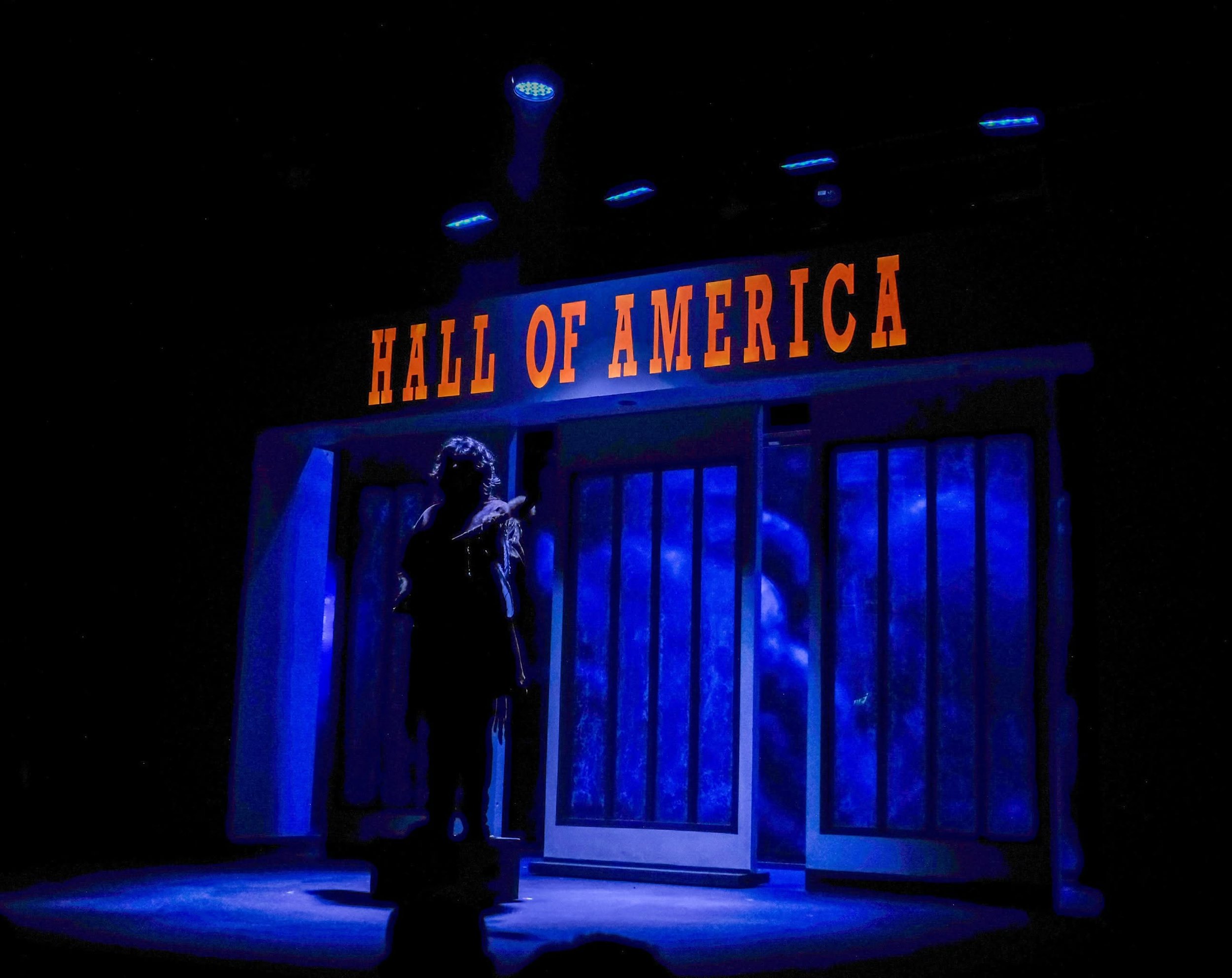
Izzy Contreras in Bad Medicine by P.C. Verrone, staged by Anna Hogan in collaboration with Courtney Elkin Mohler. Santa Fe Playhouse, 2026. Photography by Moonlight Studios.
The Real Horror Story: Who Gets to Tell the Stories?
Let's be honest: the real horror story isn't something lurking behind a creaky door in a haunted house. It's the persistent lack of Native representation in American theatre. Behind those numbers are generations of extraordinary artists and storytellers who have been pushed to the margins of an industry that should have made room for them long ago. Unlike a Halloween scare, this is a reality we can't simply turn the lights on and forget.
For generations, Native artists, playwrights, actors, directors, designers, and storytellers have had to navigate an industry where opportunities are scarce, gatekeepers are plentiful, and the stories being told about Native people have too often been told by people who aren't Native.
Sometimes we're invisible. Sometimes we're misrepresented. Sometimes we're invited into the room, only to discover that the room was never really designed for us in the first place.
Sound familiar? It could be the beginning of a pretty terrifying ghost story. But here's where things get interesting.
In Never Whistle at Night, the monsters aren't simply there to frighten us. They open doors to conversations about history, survival, identity, family, and the things that continue to haunt our communities. As co-editor Theodore C. Van Alst Jr. explained in an interview with OPB, the collection is interested not only in survival, but in how Indigenous people "thrive, we endure."
That's an important distinction.
We aren't simply stories of the past. We aren't relics, historical footnotes, or characters who appear when a production needs a little cultural flavor. We are contemporary artists, innovators, storytellers, and creators. We are here, we are thriving, and we have so much more to contribute.
We intend to keep telling our stories.
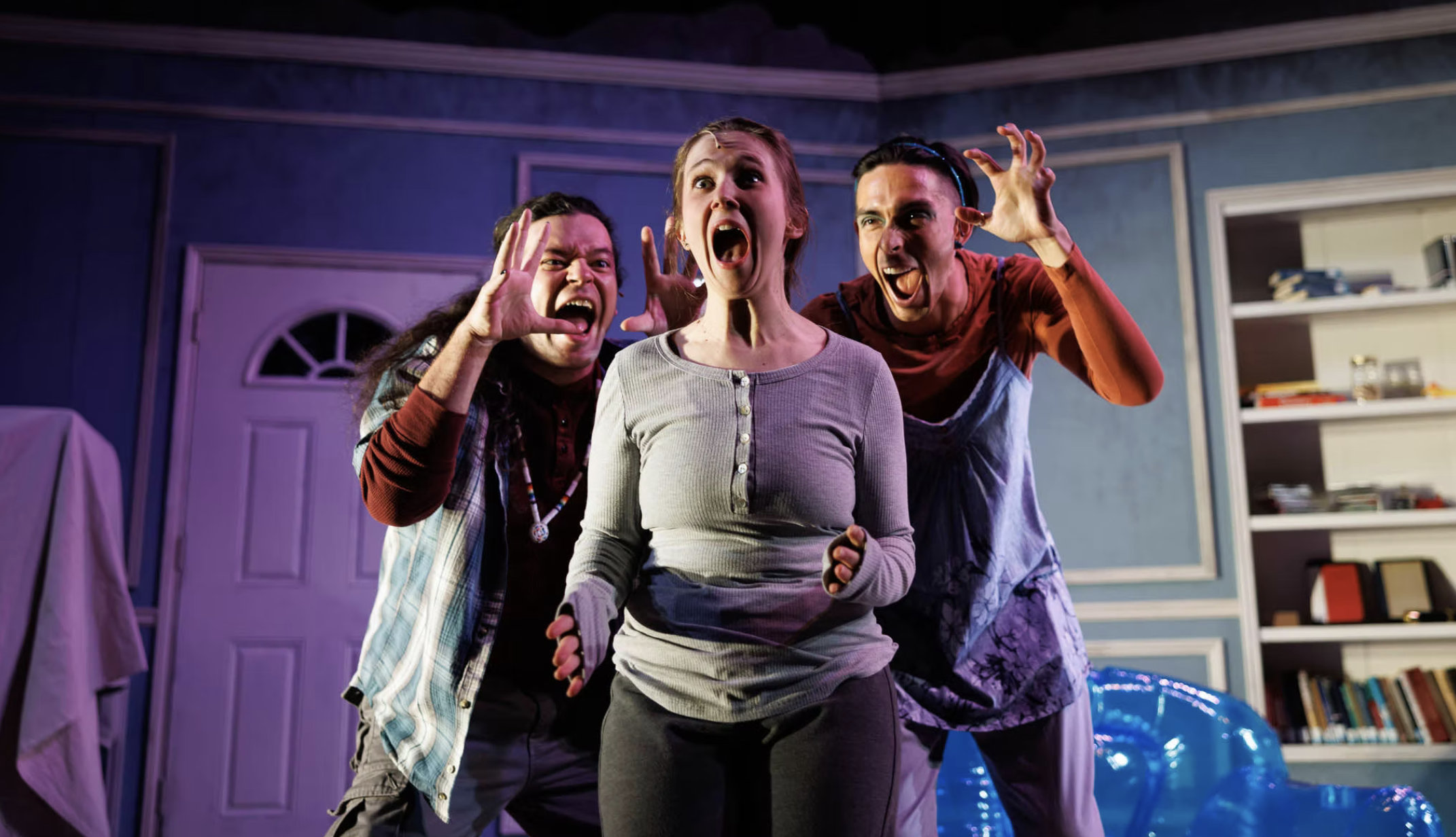
Chingwe Padraig Sullivan, Katherine C. Shaver, and Bradley Lewis in Haunted written and directed by Tara Moses. CompanyOne Theatre, 2025. Photography by Ken Yotsukura.
Don't Whistle Alone in the Dark
There's a reason Never Whistle at Night is such a fitting title for this conversation.
Across different Indigenous cultures, nighttime whistling carries warnings about what might be summoned. The stories remind us that some things are better approached with care, knowledge, and respect. But perhaps there's another lesson we can take from the anthology: we don't have to enter the darkness alone.
The book brings together writers with different voices, experiences, nations, and storytelling traditions. Their collective presence makes something possible that no single writer could accomplish alone. Each story adds another perspective. Each contribution expands the world of the collection.That's what community can do.
The Native Theatre Movement is working toward that same kind of collective abundance in American theatre. It isn't about one artist getting a seat at the table and closing the door behind them. It's about creating more tables, building more rooms, and making sure future generations don't have to fight the same battles just to be seen and heard.
This work isn't only for Native people. If you're an artistic director, producer, educator, playwright, actor, donor, audience member, or someone who simply believes that theatre should reflect the extraordinary diversity of the world we live in, you have a role to play.
Read Native plays. Produce Native playwrights. Hire Native artists. Share opportunities. Recommend Native colleagues. Build relationships that continue long after the curtain comes down. Don't just applaud representation when it happens. Help create the conditions that make it possible.
The Happy Ending Is Something We Build Together
As the Native Theatre Movement's resource explains, even the most abundant individual cannot flourish indefinitely if the relationships sustaining that abundance are neglected. The same is true of theatre. An American theatre that excludes Native artists is an American theatre that is missing extraordinary talent, perspectives, creativity, and stories. It is limiting its own possibilities.
But we don't have to accept that as the ending. The Native Theatre Movement is helping imagine and build a different future—one where abundance replaces scarcity, relationships replace transactions, and the success of one contributes to the flourishing of many.
So this Halloween, by all means, read the scary stories. Enjoy the ghosts, the monsters, the mysterious noises, and heed the warnings not to whistle at night. But when you put the book down, remember that the scariest thing about American theatre isn't what might be lurking in the shadows. It's what we might lose if we continue to leave Native voices out of the conversation.
What’s the most hopeful thing coming out of all of this, you may ask? We don't have to wait for someone else to change the story. We can do it together.
As Theodore Van Alst Jr. said when discussing the anthology's celebration of Indigenous storytelling and survival:
“We’re not only here, we’re going to be here for a long time.”
That's not a ghost story. That's a promise. With movements like the Native Theatre Movement bringing people together, sharing resources, and making space for the abundance of Native talent, it's a promise worth believing in.
So Happy Halloween, and whatever you do: don't whistle at night. Especially inside a theatre.